October is AAC Awareness Month: a month to show that every way of communicating counts, not only speech.
What is AAC?
- Augmentative and alternative communication (AAC): pictures, symbols, signs, letter boards, typing or a talking app.
- Used by people with autism, cerebral palsy, ALS/MND, aphasia after a stroke, Down syndrome and many others.
- Some people use it all the time; others only when speech is hard, such as when tired or anxious.
6 ways to take part this month
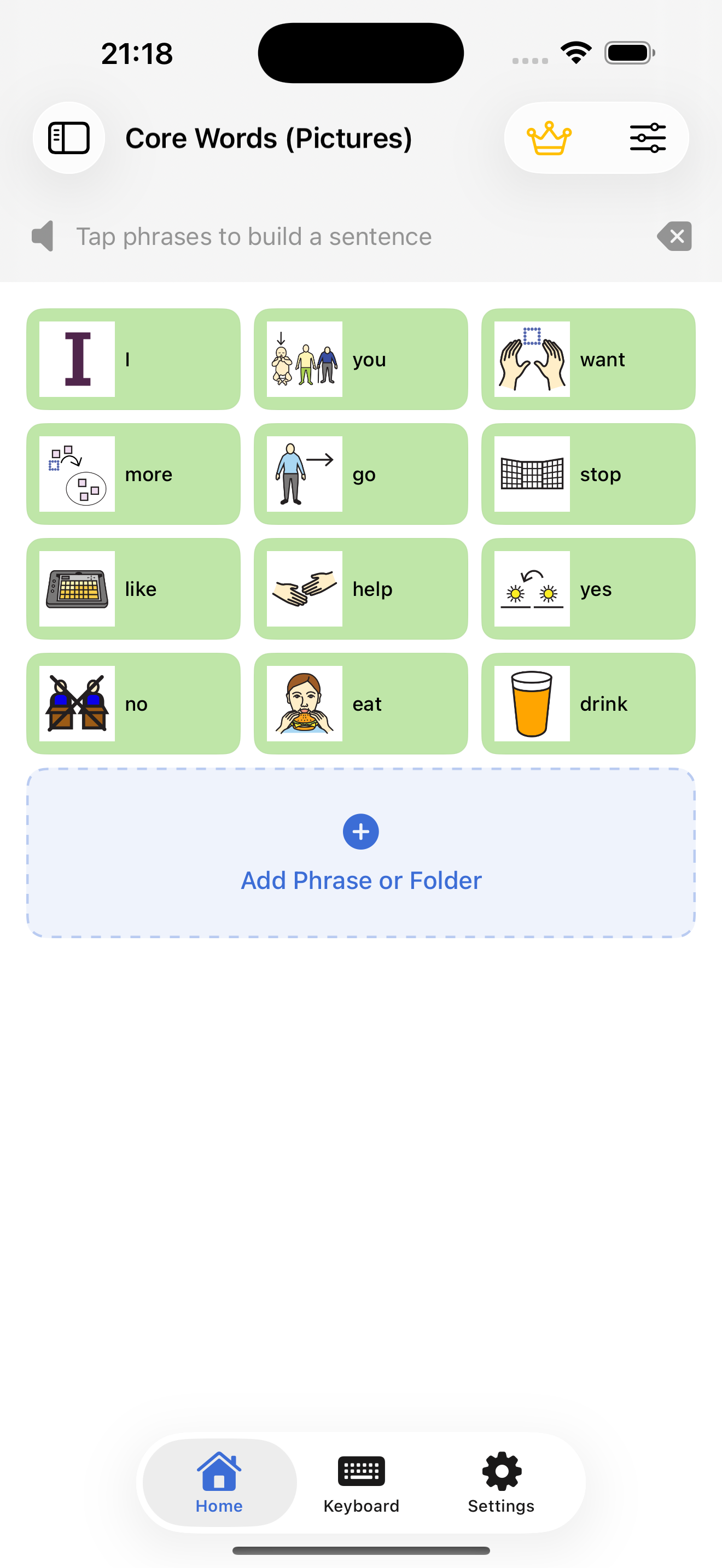
- Learn three core words. Try more, stop and help on any board. See core words.
- Model, don't test. Point to the words on the board while you talk, without asking the AAC user to "say" them.
- Wait. Give 10 seconds after a question. AAC takes longer than speech.
- Put a board where people talk. Kitchen, classroom, car. See communication boards for adults.
- Ask AAC users what they think. They are the experts on their own communication.
- Share it. Post about AAC with the hashtag #AACaware.
Try AAC yourself
- Download Speech Assistant - AAC Pad free on iPhone, iPad or Apple Watch.
- Tap Continue as Guest: no account needed.
- Spend one meal answering only with the board. It's the fastest way to understand what AAC users do every day.
New to AAC? Start with your first week of AAC.
Questions people ask
When is AAC Awareness Month?
Every October, from the 1st to the 31st. It was started by ISAAC, the International Society for Augmentative and Alternative Communication, in 2007.
What does AAC stand for?
Augmentative and alternative communication: any way of communicating besides speech, from pointing at pictures to typing on a talking app.
Do I need a device to take part?
No. A printed board or a free app on a phone you already have is enough.
Did this answer your question?

Speech Assistant - AAC Pad
Free AAC for iPhone, iPad and Apple Watch.